
Every hard moment on the phone already has a written answer. Nobody should be inventing one under pressure.
Most sales training teaches the pitch. The pitch is the easy part. What ruins booking calls is the pushback: the caller who only wants a number, the one who needs to ask her husband, the one whose walls are already covered in art. Below are the objections a portrait studio booker hears every week, each with the answer the course teaches, word for word.
THE THESIS
“Getting them on the booking call is way better than getting them in the sales room.”

That line is the strategic argument behind everything on this page.
An objection raised on the phone is free. No shoot, no studio time, no retouching, no viewing appointment, no product. Either the client books or they honestly do not, and both are fine. The same objection in the sales room, after you have photographed a family, costs you the whole job.
So the system moves every difficult conversation forward on purpose: the price, the partner, the walls, the timing. Handle it where it is cheap.
“Getting them on the booking call is way better than getting them in the sales room.”
“I JUST WANT TO KNOW WHAT I CAN GET FOR MY GIFT CERTIFICATE”
The caller who wants a number before anything else. Two steps, and neither of them is dodging.

The course’s name for this caller is the Voucher Vulture, and they are not a problem client. They have been trained by every offer they ever redeemed to find the catch first. Answer the price cold and the call is over: nothing is left to discuss except whether the number is small enough.
Step one, redirect into discovery, and ask permission to do it:
“Sure, I would love to give you that information, but first I need to ask you a few questions. Is that okay?”
Most callers say yes, and the moment they do you are in the booking call proper.
Step two, for the caller who pushes a second time. Now you answer, honestly, and reset the expectation in the same breath:
“Your certificate is going to cover one of our desk size portraits without having to pay any more. However, I just want to be honest with you. We are amazing photographers and we’re going to take some incredible pictures of your family and you are going to want to buy more. Is that okay?”
That answers the question completely, confirms they can spend nothing, and tells them the truth about what will probably happen anyway, so no ambush is left to spring later. And it ends on “is that okay,” which hands control back to a client who was braced to have it taken.
“DO I HAVE TO SPEND ANY MORE?”
The answer is no, said plainly, followed by the truth.

“Look, I’m just going to be really honest with you. We are actually incredible photographers here, and just about all of our clients do choose to spend more when they come in with their gift certificate. How you choose to do that is completely up to you.”
Bookers tend to deliver the first sentence and swallow the last. All three matter: it is honest out loud, it normalises spending more rather than pressuring it, and it hands the decision back. That final clause is what keeps the studio honest.
“I NEED TO TALK TO MY HUSBAND BEFORE WE CAN BOOK”
Agree immediately. Then ask one question, and the answer tells you everything.

“Absolutely. Yep, no trouble at all. So when is a good time for me to give you a call back after you’ve spoken to your husband?”
No pushing. No “what do you think he’ll say.” Just agreement, then a request for a time.
And then the part worth publishing, because it is genuinely clever:
“If she’s really not interested and she doesn’t want to book and she’s just using it as an excuse, she’s not going to give you a time to call back.”
The objection diagnoses itself. A real one comes back with a time, because the conversation is going to happen. An excuse comes back vague. Either way your booker learns the truth in one question, which is the difference between a follow-up list that works and one that is mostly ghosts.
The companion move: give her a reason to speak to her husband. Not “check with him,” but something specific to raise, usually the shot idea you just built together.
Each of these answers is easier to say once you have heard it on a real call. Train My Studio pairs the written objection handling script with recorded calls; give your booker the full objection library for $197 once for lifetime access.
“I CAN ONLY BOOK IN SIX, MAYBE TWELVE MONTHS”
Two facts, delivered as facts, not as pressure.

“Our calendar is actually only open for the next two months. And I can see here that your voucher does expire before six months. So if you were wanting to use your gift certificate, you will need to book in before your voucher expires.”
No urgency theatre. Two true statements about how the studio operates, and the conclusion follows on its own. Why close now rather than pencil something distant: “We want their money now, because a lot can happen between now and then if you book really far in advance.” Six months is long enough for a house move, a job change and a forgotten voucher.
Certificate terms vary by studio. In Jonelle’s own studio the certificate allows 10 days to book and 3 months to take the shoot. Those are her studio’s terms, not a Train My Studio standard.“WE ONLY REALLY HAVE ART ON OUR WALLS”
Agree with them, then widen the range.
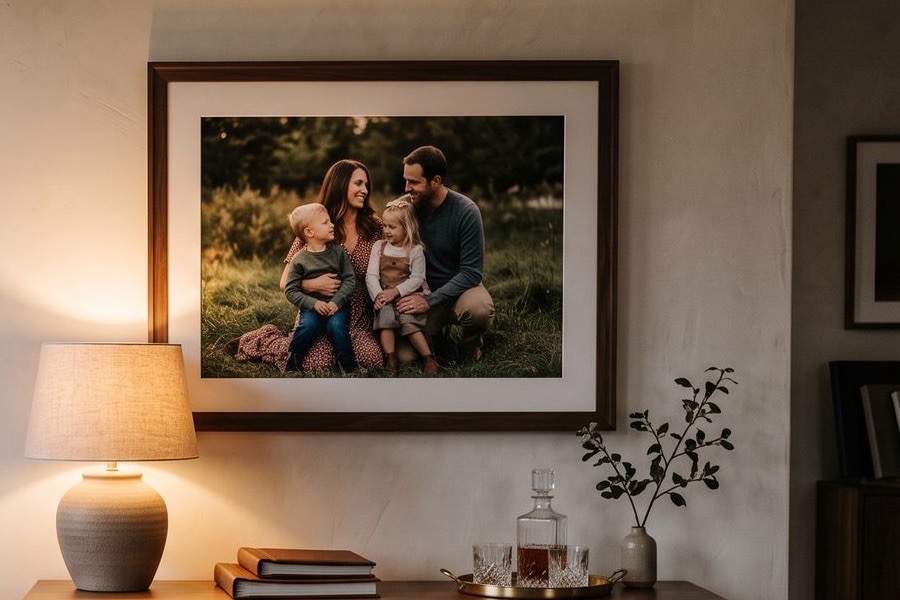
“I totally understand. Well, it’s lucky, because we actually have a full range of products which are off the wall. We’ve got plenty of options that will suit you.”
Notice the shape: agreement first, no attempt to talk them out of their own taste, then a fact that makes the objection irrelevant. Nobody is corrected about their own house. They are shown another door.
“I’M A RENTER, I’M NOT ALLOWED TO PUT HOLES IN THE WALLS”
A practical objection deserves a practical answer, and there are three of them.
“That’s not a problem. Our canvases are actually really light, and you can hang them with four of those 3M tabs and they easily remove. We do also have a full range of off the wall products. Or if you do really love a large art piece, we do have easels available.”
The least emotional objection on the page and the most commonly fumbled, because bookers hear it as a polite no. It usually is not. It is someone who wants the picture and has a lease. Answer the lease.
DAD IS NOT COMING
Do not argue him into it. Build a photograph that only he can be in.
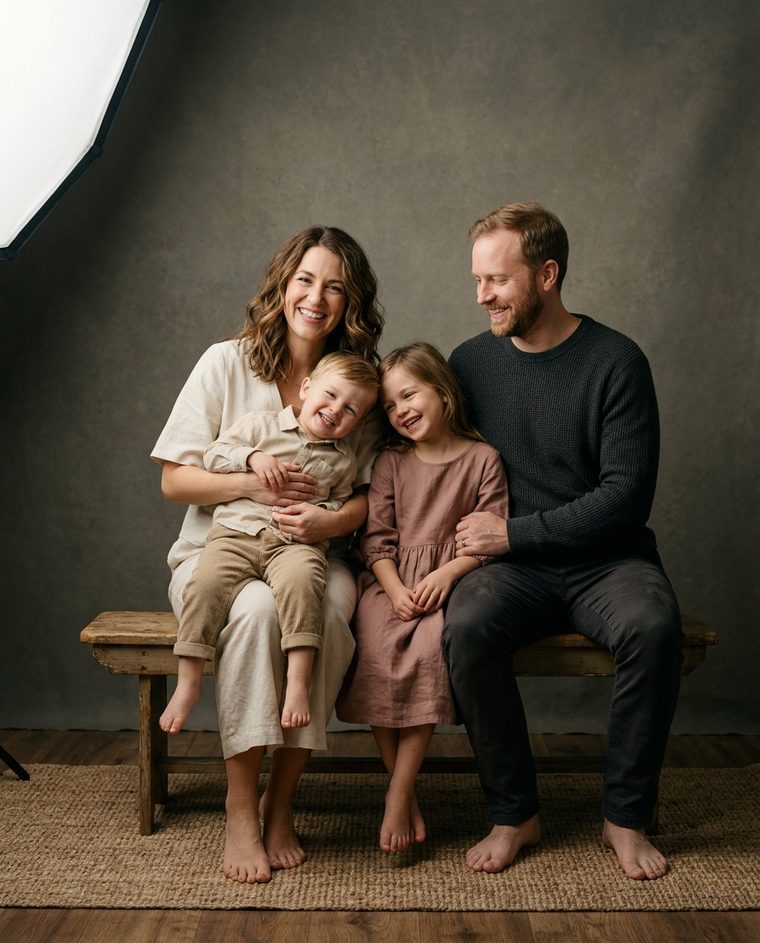
More of the course goes to this objection than any other, and the primary move is not persuasion. It happens back in discovery: create a shot idea that requires him.
Jonelle: “If dad has to be there because you’ve created this amazing shot that only he can be in, well, he has to come, doesn’t he?”
The scripted response on the call itself:
“What an amazing opportunity to get a shot of the three of you… it would just be a beautiful opportunity to capture at this point in your life.”
And the rule behind it: give the client a job or a reason to speak to her husband. She is going to have that conversation without you in the room, so send her in with something specific.
The one-liners, and how to use them
The course provides a set of short emotional lines for this conversation. The instruction is to use two or three, never all of them. Fired off as a list they stop being true things and become a pitch, and the caller hears the difference immediately.
- “You have to exist in your photos for your children.”
- “Isn’t your family what you’re most proud of?”
- “In five years everyone’s going to say, wow, I was so much younger, I had less wrinkles, I was way thinner.”
- “A portrait is a way you can connect with that person when they’re not there in the home.”
- “Portraits are like a piece of furniture that goes on your wall that you guys do want to make together.”
The first is the hardest hitting line in the course and should be used sparingly for that reason. The last does something different: it reframes the spend as furniture, a thing a couple decides to make together, rather than an expense one has to justify to the other.
Why they work, honestly stated rather than dressed up as psychology: “Sometimes people need to be actually told. Those emotional triggers will just remind them.” Nobody is tricked into valuing their family. They are reminded of something they already believe.
“You have to exist in your photos for your children.”
THE PART THAT MAKES THIS NOT PUSHY
“We don’t want them to think there’s a minimum spend or there’s an obligation to buy.”
Read a page of scripted answers and the fair reaction is to wonder whether this is a system for wearing people down. It is not, and the course is explicit about why:
“We don’t want them to think there’s a minimum spend or there’s an obligation to buy. It’s up to us to take such amazing photos that they just fall in love with them.”
The whole strategy rests on the photographs being good. These answers exist to get a family in front of a camera who genuinely want to be there, not to extract money from people who do not.
Which is why the last instruction in the objection material is the one to let go. On a real call where the client says she is not the right fit, Jonelle’s read is:
“Not trying to convince her… she’s just being honest with me. So let it go.”
A booker with permission to lose a call stops sounding desperate on the ones they can win. And a client who says no honestly on the phone has saved you a shoot and a viewing.
Every script on this page is quoted verbatim from the course’s own material. Where a studio name appears in the original it reads [Studio Name] here. No real client is named or quoted anywhere on this page.
These are the objections. The course is the objections plus real calls where they actually happen.
Train My Studio teaches the whole 3-call system, with the Voucher Vulture script, the Getting Dad To Come cheat sheet, and real recorded calls where these objections come up and the instructors explain what worked. A login for every booker on your team.
One payment. Lifetime access. 30-day money-back.