
The booking call: fifteen minutes, in a fixed order, and every step holds up the one after it
This is the call that decides the size of the sale. Not the shoot, not the viewing, this call. It runs about fifteen minutes in a sequence: who is coming, what they are actually like, one photograph they can already see on their wall, then the quote, then the card, and only then the calendar.
The order is the product. Below is the whole sequence, with the reasoning in the instructors’ own words.
THE ORDER OF OPERATIONS
Congratulate. Why they responded. Who is coming. Discovery. Shot ideas. The quote. The deposit. Then the date.

That is the call. Not a list of things to cover, a running order, and every step is load-bearing for the next.
- Discovery before shot ideas. You cannot invent a photograph for a family you know nothing about.
- Shot ideas before the quote. A price attached to a picture they can see is a decision. A price attached to nothing is just an amount.
- The quote before the deposit. Nobody puts a card down on an unknown number.
- The deposit before the calendar. A date agreed without money is not a booking, it is a plan.
It runs off a printed sheet, one page per client, filled in live.
“What happens with confused customers, they don’t book.”
PEELING BACK THE LAYERS
Keep asking until you reach something you could actually photograph.

The signature technique of the system, and the one most bookers stop halfway through. You ask what a child is into. The parent says “unicorns.” Most bookers write down “unicorns” and move on. That is not a shot, it is a category.
Jonelle: “Keep asking those sorts of questions until you get something that you can actually photograph.”
So you keep going. Which unicorn? Is there one she sleeps with? What is it called? Now you have a photograph nobody else has, and that is why the sale gets bigger: “You’re instantly going to get higher sales because they’re buying photos that they’re connected to and they have an emotional pull to.”
Ask youngest first, and finish with the person on the phone
The sheet works up: youngest child, older ones, the partner, the caller last.
“Hi [name], so who in your family is coming along to your photo shoot?” … “What’s your youngest one’s name?” … “How old is [name]?” … “your partner or husband” … “your name.”
It starts where the parent is most fluent, so usable material arrives in the first ninety seconds rather than the fifth minute. And by the caller’s turn there is momentum, because they have spent the call describing someone else. By then, in the course’s phrase, “it’s like you’ve practiced.”
The independent evidence, with the caveat it deserves
Gong Labs analysed 519,000 sales calls and found calls containing 11 to 14 discovery questions converted at 74%, against 46% for calls with only 1 to 6. Gong Labs, analysis of 519,000+ sales calls
But the honest version matters more than the flattering one: Gong also found losing calls sometimes contain more questions than winning ones. It is about the quality of the discovery and how much of the call the client spends talking, not the count. A booker firing fourteen questions like a form is doing the opposite of this.
Gong Labs, analysis of 519,000+ B2B sales calls. Not photography-specific, and Gong’s own finding is that question quality and listening ratio matter, not question count. Read as evidence for deep discovery, not for interrogation.“Keep asking those sorts of questions until you get something that you can actually photograph.”
SHOT IDEAS BEFORE PRICE
“We cannot give the quote before they have visualized a shot idea in their mind.”
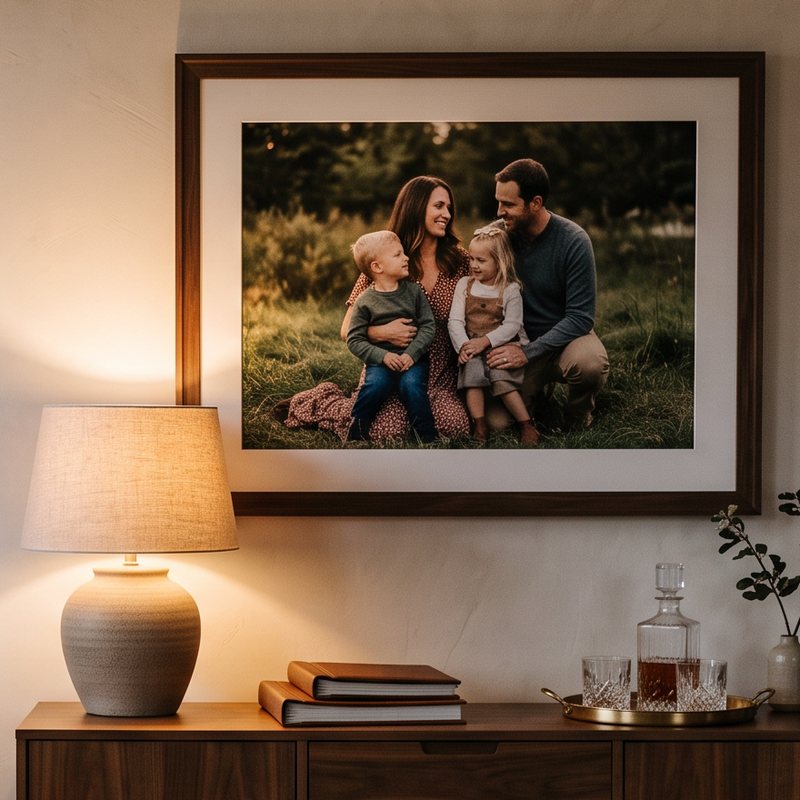
That line from Jonelle is the closest thing this system has to a law. The quote lands on a picture, or it lands on nothing.
So before any number is spoken the booker turns the discovery into one specific photograph and describes it back: colour, position, light, who is in it, what they are holding. Deep visualization is the name for the describing part, and you keep going past the first nod: “You need to keep describing that image until they get to a point where they can visualize it in their mind.”
Then the half that stops bookers freezing: “A bad shot idea is way better than no shot at all.” A booker who is not a photographer often refuses to suggest anything in case it is wrong. Wrong gets corrected, usually enthusiastically, and then you are designing it together. Silence gets nothing.
Two small moves carry this part of the call. Narrate the note-taking: say out loud that you are writing it down, because “they’re thinking, oh well, she’s really interested in what I’m saying.” And to the booker who thinks notes are not their job, Jonelle: “I’m not the photographer so I don’t know how to take good notes. Well, that is absolutely not true at all.”
Mirror their words: describe the shot back in the client’s own phrasing, not a tidied professional translation. Jonelle, watching a booker do it: “He’s now reiterating those words back to her. So she’s going to think, wow, he really listened to me. Because he did.” Which is why none of this is manipulation. The technique is to actually listen, then prove it.
“A bad shot idea is way better than no shot at all.”
GIVE THE PRICE. ON THE PHONE.
They tried withholding pricing for a month. Their average sale dropped 67%.
Almost every instinct in the industry says hold the number back until they are in the room. Mike and Jonelle tested that on their own studio, with their own money, for a month.
“We tried giving no pricing for a month last year and our average dropped by 2/3 or 67%.”
The strongest evidence on this page, because it is a company reporting a loss against itself.
Mike: “Giving them a price helps them so that they don’t get that sticker shock in the sales room.” And the version that explains the higher sale rather than the avoided disaster: “Giving people pricing will increase what your normal clients spend, as they’ve got time to prepare to spend with you.” A client who knows the numbers three weeks out can move money around. One ambushed at the viewing can only say no.
The delivery: permission, the difference, then pass the butter
Ask permission first, because “when you become permission based selling, you become the friend.”
Quote only the difference, plain words for what is included and premium language only for the upgrade: “You don’t want the product that is included with the gift certificate to sound as good as you are.”
Then deliver the number in the flattest tone you own. The course calls it Pass the Butter: say the price the way you would ask someone to pass the butter at dinner. The loading you put on a number is the loading the client hears.
“I can see here that you have that amazing $550 gift certificate. I wanted to give you an idea of pricing if you did want something in addition to your prize. To give you an idea, to get a portrait that is double the size on canvas with full artistry, that would only be an extra $500. How does that sound?”
And then stop. The highest leverage instruction in the course:
“Then stop and wait. We want to hear their reaction, don’t fill the silence.”
Jonelle is honest about how hard that is: “There was quite a big silence there. And quite often it’s hard not to jump in.” Hold it anyway. The silence is arithmetic, not resistance: “they’re probably just thinking, oh, do we have that money at the moment? Maybe I could shuffle some money around.”
$550 and $500 are Jonelle’s own studio’s figures, quoted so the script reads as it is actually used. Not a Train My Studio rate card. The 67% drop is their own test on their own studio, reported by them.Pass the Butter is easier to hear than to read. Train My Studio includes real recorded booking calls, so your booker hears the tone as well as the words; photography sales training for your booker is $197 once for lifetime access.
THE DEPOSIT, BEFORE THE CALENDAR
No date gets discussed until the card is processed. “You don’t make tentative bookings.”

The step studios find hardest to adopt, and the one that changes the show rate. The holding deposit is charged on a card before anyone looks at the calendar. In Jonelle’s studio that is $50, refundable. The reason is not the fifty dollars. Mike: “It’s also going to stop people thinking that they’ve made a tentative booking, because you don’t make tentative bookings.”
The close is an either/or, never a yes-or-no:
“Is that on Visa or MasterCard?”
Two options, and neither of them is “no.” Compare it to “would you like to pay the deposit today,” which hands the client a question nobody asked them to answer. And take it now rather than later: “We want their money now, because a lot can happen between now and then if you book really far in advance.”
Then, and only then, the calendar. Two specific times get offered, not a list, not “what suits you.” Sounding fully booked is part of the job: “If the customer believes that we’re really busy, they’re going to think that they’ve come to the right place.” And the weekday goes first. Mike: “I always suggest a weekday first, and I let them ask me for a Saturday.” In Jonelle’s studio a Saturday costs $200 off the certificate, so a client who asks for one has chosen it rather than been sold it.
The $50 holding deposit and the $200 weekday-to-Saturday difference are Jonelle’s own studio’s figures. Not a general rate.“You don’t make tentative bookings.”
WHAT A GOOD BOOKING CALL PRODUCES
A client who is excited, informed, paid in, and dated.

A shot idea they are looking forward to, a rough idea of what things cost, a deposit charged, and a date. “Excited” is not decoration in that list, it is the mechanism.
“Booking calls done well get clients excited. And what do excited clients do?” “Spend money.”
Two or three days out comes the Excite Call, on the system page. The pushback you will hit during this one, with the written answer to each piece, is on the objection library.

This is the outline. The course is the call itself, plus real recordings of it working.
Train My Studio teaches this call step by step, with the Booking Sheet, the pricing script, and real recorded booking calls where the instructors stop and explain why it worked. A login for every booker on your team.
One payment. Lifetime access. 30-day money-back.